
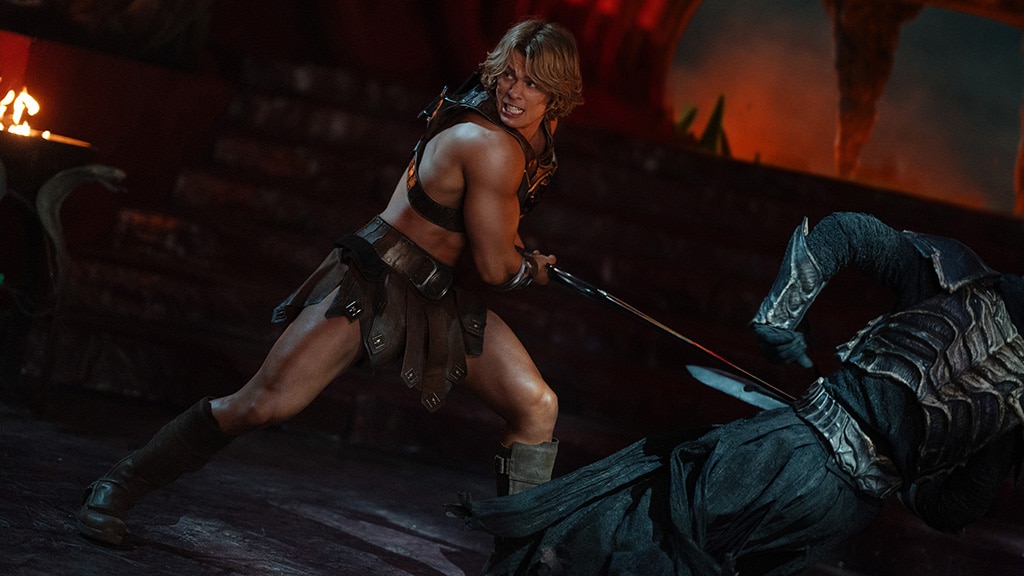
Even if you weren’t one of the many kids who rushed home after school to catch Filmation’s He-Man and the Masters of the Universe on TV in the 1980s, there’s a solid chance that you’re at least slightly familiar with the Masters.
This is what those in the toy business call a cross-generational property, and in this case, it’s one that kids and families have enjoyed across five decades. Of course, it all started with an epic toy line: Mattel’s Masters of the Universe.
If you’re reading The Pop Insider, you probably don’t need the history lesson, so I’ll drop a quick TL;DR to get everyone else up to speed: A toy line spawns an animated series, a spinoff, a live-action film in 1987, and at least five animated reboots or continuations across five decades of storytelling that expanded into comics, books, games, and more toys. And the saga of how Amazon MGM Studios and Mattel Studios brought Masters of the Universe back to the big screen in live action is a nearly 18-year tale worthy of a documentary film of its own.
All that said, Masters of the Universe — MOTU from here on out — has some heavy lifting to do. It follows the Academy Award-winning Barbie as the second theatrical release from the legendary toymaker-turned-IP-driven-entertainment juggernaut that towers over the Kingdom of El Segundo, California. It has to honor the past while connecting with a 2026 audience that can carry the franchise forward, all while respecting decades of established lore that is often contradictory.
So does it land? Yes, it does.
Filmmaker Travis Knight, co-founder of Laika (Coraline), knows a thing or two about toyetic movies, having played in the Hasbro toy box back in 2018 with Transformers: Bumblebee. Now, Knight is playing with Mattel IP.
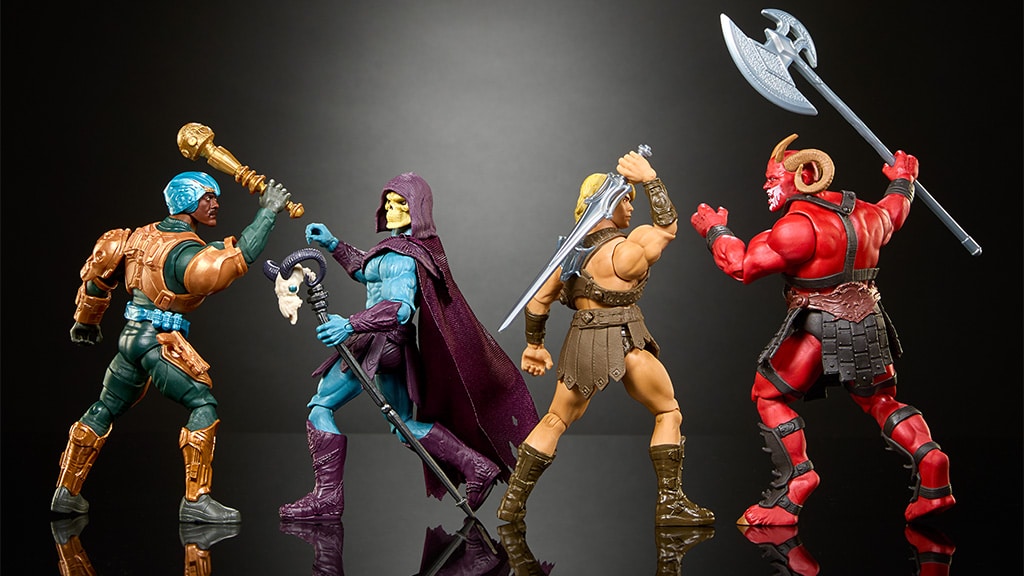
At its core, MOTU is the ultimate mash-up of science fiction and fantasy, rooted in sword-and-sorcery, and Knight’s film heartily leans into all of it, from the colorful and barren landscapes of Eternia to the ominous majesty of Castle Grayskull and the sinister secrets of Snake Mountain.
The general plot is simple enough, with Prince Adam (Nicholas Galitzine) stranded on his mother’s home planet, Earth, following an exile 15 years ago when the “Evil Lord of Destruction,” Skeletor (Jared Leto), made a huge mess of Eternia’s capital city, Eternos, and took Adam’s parents, King Randor (James Purefoy) and Queen Marlena (Charlotte Riley), hostage. Unfortunately, Adam, slumming it in the largely useless world of corporate HR, has been separated from his Sword of Power, a mysterious weapon with the power to send him home.
Following years of hunting for the sword — and making friends and coworkers think he’s kooky with all the talk of being from another planet — he finally finds it in a scene packed with Easter eggs alluding to the real-world MOTU origins. The discovery sends a signal that calls not only his old friend Teela (Camila Mendes) to Earth, but also the villainous Beast Man, one of Skeletor’s most feared henchmen.
After returning to Eternia and witnessing the aftermath of 15 years of doom and gloom, Adam reunites with Teela’s adoptive father, Duncan/Man-At-Arms (Idris Elba), and his talking green tiger, Cringer. Then, he finally raises his sword aloft to become He-Man, the most powerful man in the universe.
On his way to uniting the forces of good to take down Skeletor, Evil-Lyn (Alison Brie), and their band of evildoers, including Tri-Klops (Kojo Attah), Trap Jaw (Sam C. Wilson), Spikor (James Apps), and Goat Man (Hafþór Júlíus Björnsson), Adam encounters legendary figures from his childhood. Among them are the Sorceress (Morena Baccarin) and those he dubbed with descriptive names like Ram Man (Jon Xue Zhang), Fisto (Jóhannes Haukur Jóhannesson), Mekaneck (James Wilkinson), and Roboto (voiced by Kristen Wiig) — all perfectly cast.
Just as Barbie knew which buttons to press to connect with its audience, MOTU steers right into the absurdity of the property with gags tied to the character names, Adam’s tendency to “draw ripped dudes,” and the over-the-top delight of Skeletor as a villain. The film features perfect callbacks to the source material spanning the franchise’s entire history. It works masterfully.
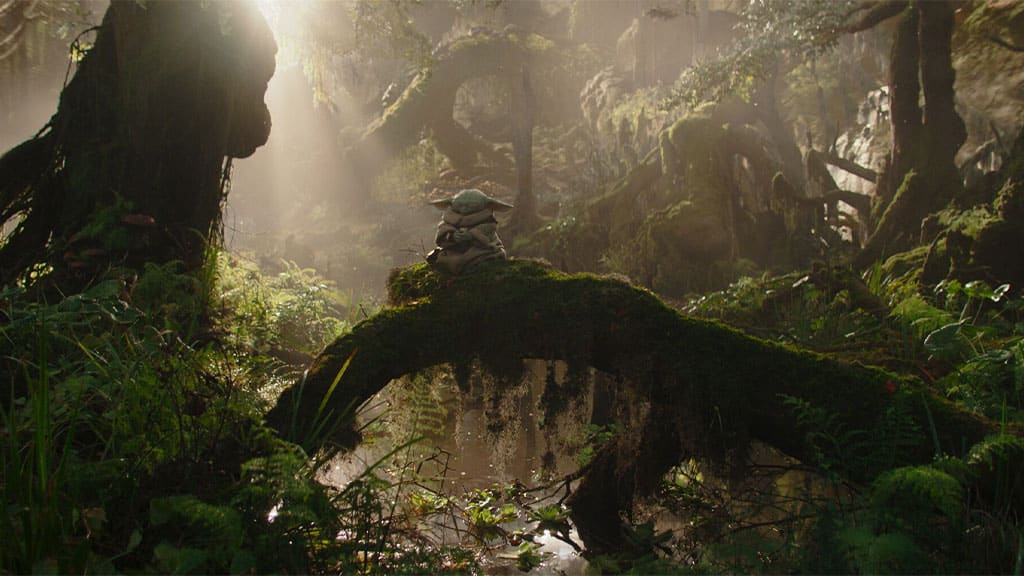
Visually, MOTU is a grand spectacle that looks and feels huge. Viewed at an Early Access screening in 4DX, complete with moving seats and environmental effects spanning scents, smoke, and fog, MOTU is immersive in ways we don’t see very often these days. Knight leans into his love of ’80s cinema, delivering a classic tale of good vs. evil with massive set pieces, comedic beats, and some real stakes.
Unlike the ’80s, when cartoon violence meant everyone dusted themselves off to fight another day, there are casualties in this film — a lot of them — giving Skeletor’s legendary, meme-worthy comedic menace a dangerous edge of pure evil. No one is safe, and it’s shocking to see.
It’s worth noting that the soundtrack straight-up rocks, with an original score by composer Daniel Pemberton (Project Hail Mary) and Queen guitarist Sir Brian May, an original song by The Darkness, and well-positioned needle drops, including The Cure’s “Boys Don’t Cry,” Snap’s “The Power,” and 4 Non Blondes’ “What’s Up” — yes, they did play into the meme-tastic legacy there.
While the film runs a bit long at 2 hours, 20 minutes, including must-see pre-, mid-, and post-credits scenes (seriously, do not miss them!), Masters of the Universe is the kind of fun, action-packed summer blockbuster the world needs right now.
Rating: 4/5 Power Swords
