
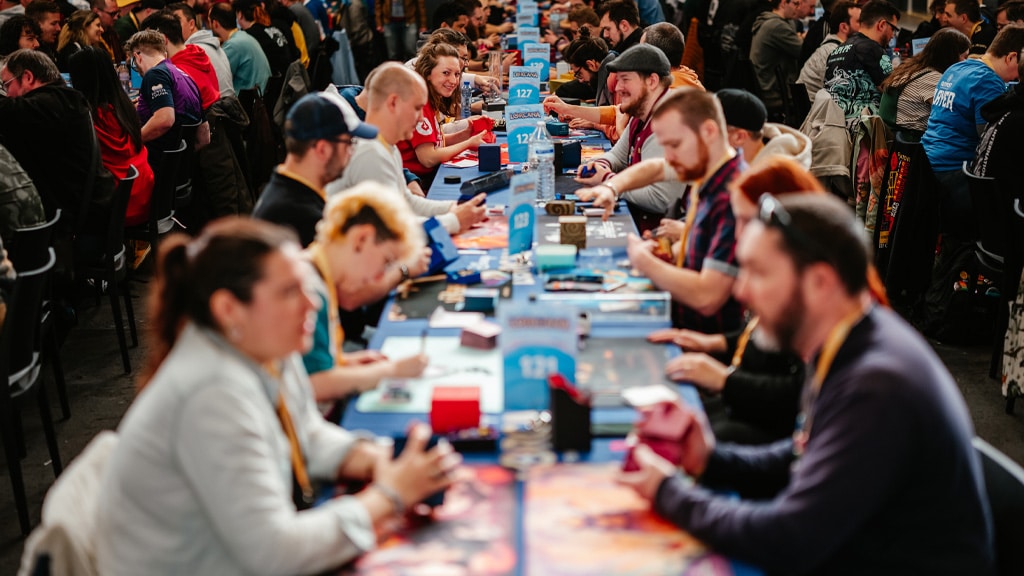
For decades, fans used collectible cards to reflect their love for sports teams. Whether they were displaying a 2.5-by-3.5-inch lineup of their favorite baseball players or trading a duplicate card for a different athlete, the concept brought people together and created an avenue to connect with fellow fans. But in the ‘90s, cards became more than tradeable collectibles — they were gamified.
In 1994, Wizards of the Coast took fans’ desire to exchange and engage through a card-based medium to a new level with the introduction of Magic: The Gathering (MTG). This trading card game (TCG), and brands that closely followed like Pokémon and Yu-Gi-Oh!, offered fast-paced, portable gameplay and brand new worlds to sink into.
More than three decades later, the TCG fandom has grown to span dozens of original properties, officially licensed integrations, and hundreds of thousands of collectible cards. TCG fans gather at conventions, engage in hosted events within their communities, and connect online. There are more open seats at the TCG table than ever before, making it easy for new fans to sit and lay their cards out.
RIP, BUILD, PLAY
The general TCG mechanics follow a reliable pattern: Open your card packs, build your deck, and get to gaming. Oftentimes, players get hooked on step one — ripping open full sets or booster packs to reveal surprise cards, characters, and actions, looking for the ideal addition to a deck or uncovering a coveted rare pull. After the packaging is shed, a TCG becomes a customizable experience that puts the player in a position of geeky, god-like power (if you play your cards right, literally).
TCGs offer players endless possibilities to stack their decks, with millions of possible outcomes in a single game or challenge. Instead of opening a single starter pack and playing with the same cards over and over, TCG enthusiasts can expand, trade, build, and refine as often as they like, keeping things fresh and exciting, especially as manufacturers give them new offerings on a regular basis.
Mark Rosewater, head designer on MTG, refers to this sensation as the “Crispy Hash Brown Theory.” According to Rosewater, the game often evolves through new cards, art, and complete sets, forcing players to stay alert and continue changing their perspective.
“Metaphorically, when you have a hash brown, the best part about it is the crunchy outside, right? Now, at some point, you eat the outside, you go to eat the inside, and it’s not as good as the crunchy outside … In gaming, the crunchy outside is the exploration period. The [most fun] part of a game is that you don’t know anything, and you’re exploring, and you’re learning,” he says. “With most games, you get past the exploration point … But Magic keeps regrowing its crispy undershell because we keep making more content. The idea is, ‘I think I understand Magic. I’ve cracked it. I know how Magic is.’ And then a new set comes out, and you’re like, ‘Uh-oh.’ Cards that might have been great cards aren’t anymore, or cards that were bad become good. The churn, the flux of Magic keeps it very different.”
While the rip, build, and play pattern repeats and the Hash Brown Theory prevails, the TCG space expands. New games are also popping up as OG MTG players become game designers themselves, bringing their knowledge of game mechanics and experience in the hot seat to new generations of players.
“So many people who’ve grown up and become part of the ethos of being a gamer — people who have lived and breathed MTG their whole lives — are now creating games. And this next wave, they’re much more advanced,” Rosewater explains. “They’re gamers that understand what a TCG is, and they’re leaning into all the really great strengths of a TCG.”
TCG makers are cranking out new offerings for fans, featuring brand-new worlds of fresh characters, like Legend Story Studios’ Flesh & Blood. But others are taking a less risky approach and flipping well-known IPs into decks of their own.
FAST-PACED, FANDOM FUELED
For fans who can’t decide where to start, sometimes it’s about diving in with familiar faces. Ravensburger’s Disney Lorcana, Kayou’s My Little Pony TCGs, and Riot Games’ Riftbound all invite an untapped audience to experience the thrill of TCGs with characters they already know and love.
Riftbound lets video game fans swap their controllers for deck binders. The relatively new TCG features characters from Riot Games’ popular League of Legends video games like Arcane, 2XKO, and more. Similar to the established video game series and spin-offs, players can employ different strategies as they work with a champion, manage runes, and control battlefields.
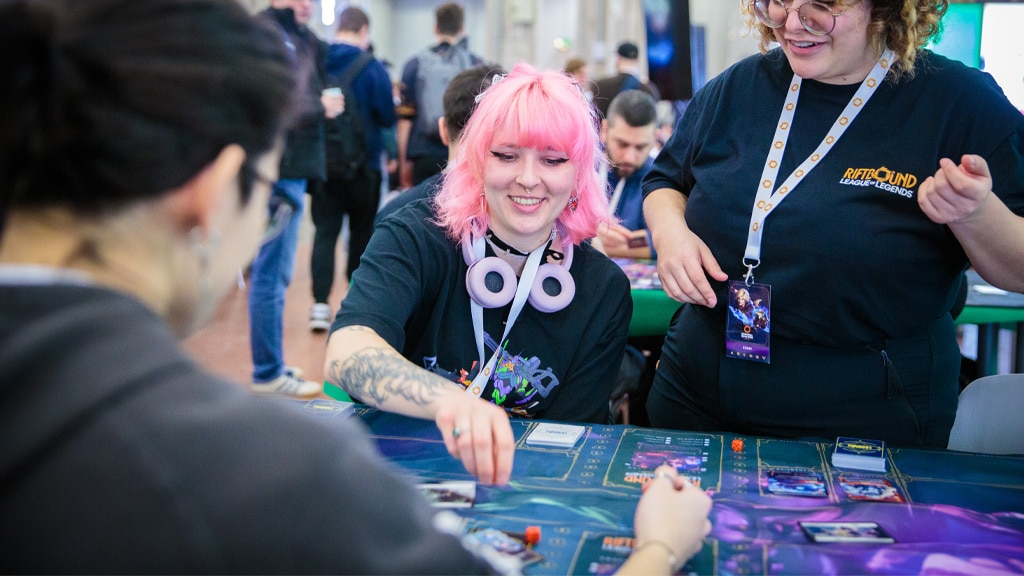
Fans can engage with 'League of Legends' in a new way at Riftbound events. | Source: Riot Games
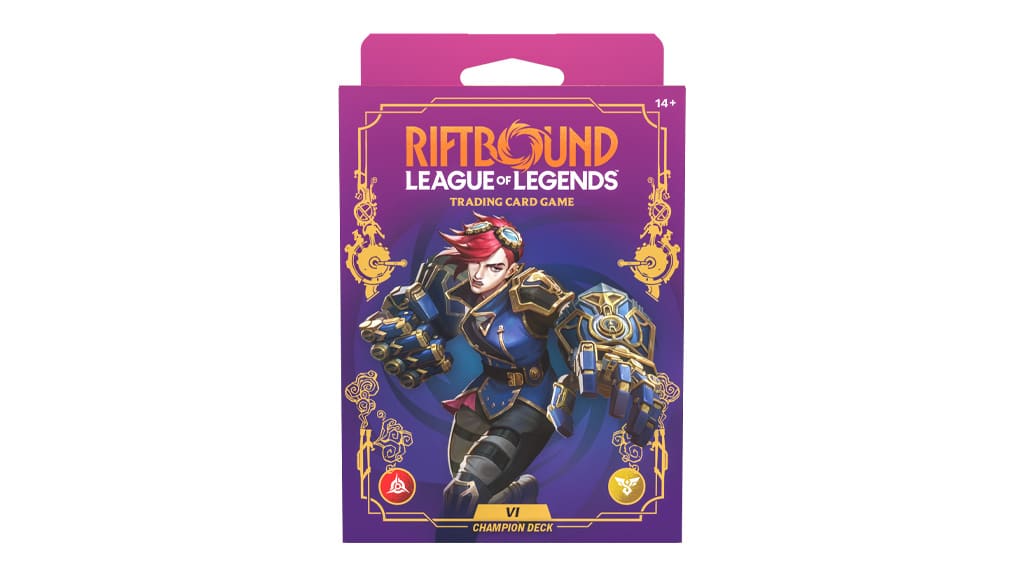
Fans can play Riftbound with larger sets and smaller decks. | Source: Riot Games

The team at Riot Games wanted Riftbound to cater to every type of fan. “It’s important to make a game that will connect with both new and existing TCG players while also staying true to the characters, themes, and universe that fans of the original IP already know and love,” says Nik Davidson, Riftbound design director at Riot Games. “With Riftbound, we wanted to create a game that felt accessible for League of Legends players who might be unfamiliar with TCGs, while still offering the depth and excitement for core TCG players.”
With TCGs centered on familiar faces, both new and veteran tabletop players have additional ways to interact with their favorite characters (or learn about a new fandom). For Disney and Pixar fans, Ravensburger’s Lorcana is a dream come true. During the immersive game, players can create combos and decks with groups of characters that would likely never share screen time, bringing Disney fandoms together like never before.
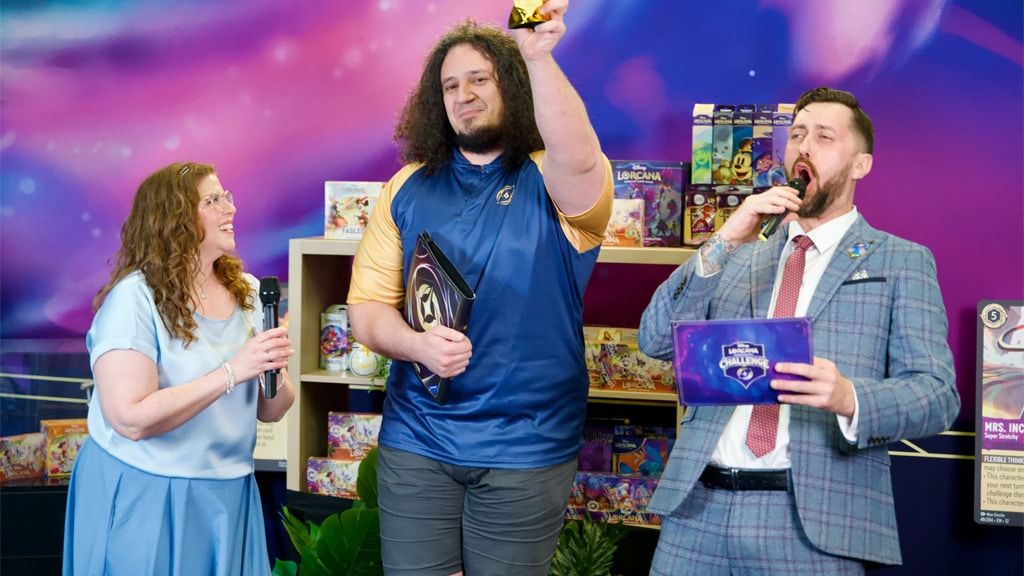
Rebekah Quests hosts different Disney Lorcana events, including those with competitions and prize winners. | Source: Ravensburger
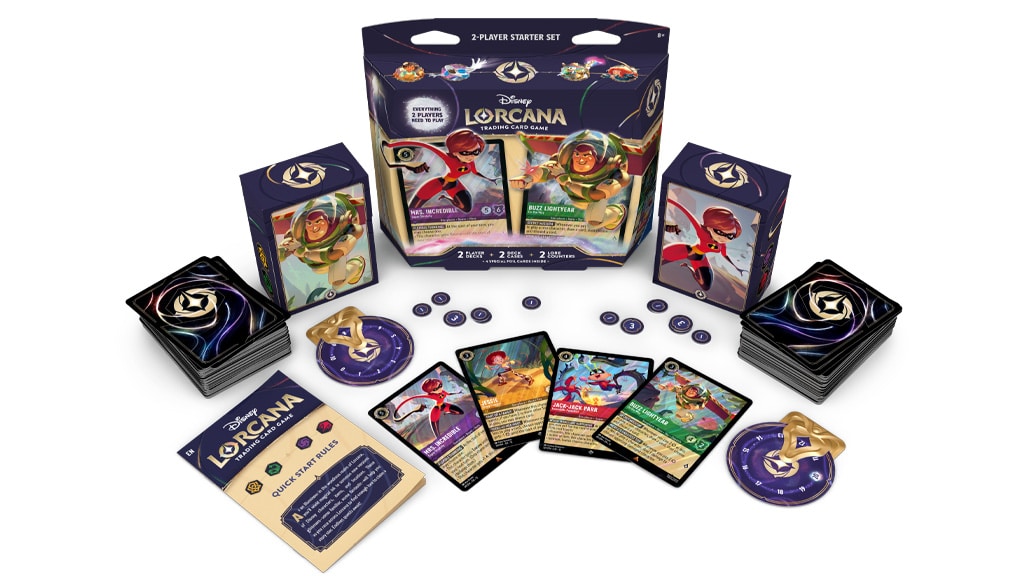
Disney Lorcana features numerous Disney and Pixar characters. | Source: Ravensburger

Official Disney Lorcana host and caster Rebekah (@rebekahquests to her more than 12,000 Instagram followers) says, “Because it’s Disney, there’s this wholesome appeal [to the game] that maybe isn’t in some other trading card games out there on the market.”
She also notes that the specific fandom influence creates an opening for female-identifying players. “Don’t wait for permission to feel like you can dive in [to TCGs] … there’s space for you. TCGs are so predominantly male and the Disney Lorcana community is, anecdotally at least, one of the most diverse communities in the TCG space … I know that it can cause a little anxiety for people who’ve never stepped foot in a local game store to think about playing a TCG, but there’s space here for everyone.” The TCG influencer also hosts the Happy Questing Club, where Lorcana fans can learn more about the game and connect with a Lorcana expert on a deeper level in a safe, secure space.
Even MTG frequently mixes fandom- themed sets with their original concept sets to reach wider audiences who have yet to discover their love for TCGs. The company is supplementing its original MTG brands with sets and decks inspired by Avatar: The Last Airbender, Teenage Mutant Ninja Turtles, and more. The team recently released Marvel Super Heroes and The Hobbit sets, with a Star Trek collection coming in November.
DIGITAL CONTENT LEADS TO COMMUNITY CRAVINGS
While some players discover TCGs through an existing love of a familiar brand, others accidentally stumble upon the genre during a doomscroll.
There are millions of hours worth of content featuring TCGs from brands, influencers, and your next-door neighbor, highlighting how the gameplay works, showing what comes in a set, providing deckbuilding tips, and more. One style of video, however, seems to keep fans coming back: the rip.
For years, TCG players have held their breath while pulling at the perforated line, hoping to see their desired card. The simple act of ripping open a card pack has led to smiles, tears, laughter, fights and — depending on the rarity of the cards nestled inside — economic prosperity. Content creators like Deep Pocket Monster, EliPokeRips, and more have millions of followers tuning in to see what characters, designs, and abilities hide in a pack.
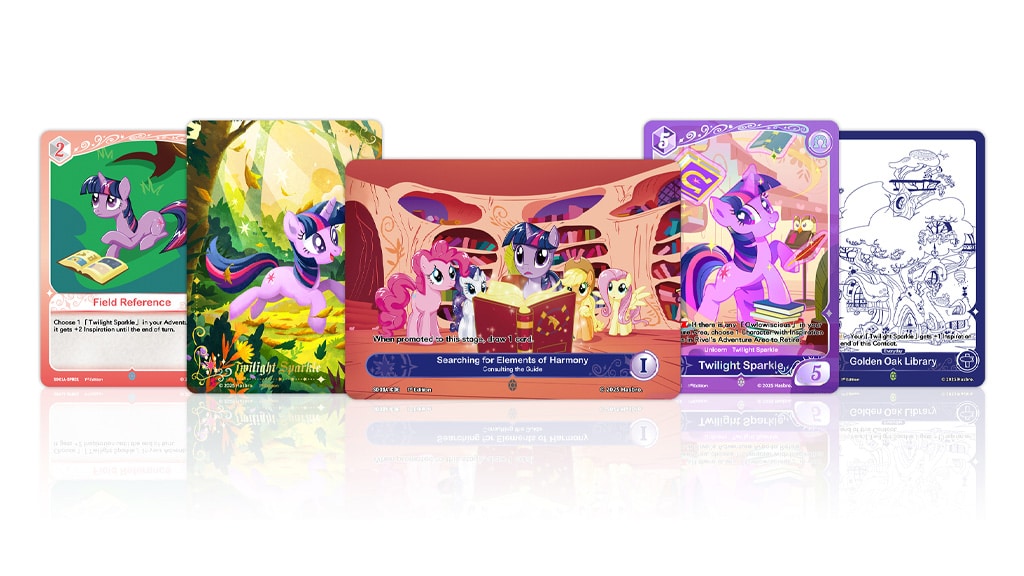
“There is a general excitement that comes with pulling a hit or a rare card, and social media has created an opportunity for fans to share those special moments with each other and with the community as a whole,” says Sergio Godinho, U.S. general manager at Kayou, which offers trading cards for a variety of IPs, including My Little Pony, KPop Demon Hunters, and more.
In games like the Pokémon TCG, rare cards often have stronger impacts during play and beautiful, unique artwork. Fans look for these cards as a way to improve their in-game battles or collectible card displays, and the increased presence of TCGs online means that other players can easily jump into the experience.
According to Godinho, “Card rarity is based on a combination of character popularity, gameplay value, story significance, artwork, and overall product balance. Popular characters and highly playable cards are often placed in higher rarity tiers, while alternate and parallel versions help make the game more accessible for different types of players.”
The excitement continues as conversations, cards, and obsessions move from online to IRL. After interacting with other players and card-inspired content through keyboard clicks, especially through the COVID-19 pandemic, many players yearn for the social components of TCGs to unfold in person.
“When the world became so digital — when your face is on a screen 23 hours a day — people really, really want to be with other people,” Rosewater says. “One of the things that has made MTG really thrive is that people crave interpersonal communication.”
Thankfully, retailers are answering the call. Twenty Sided in Brooklyn, New York, caters to those craving screen-free socialization around TCGs.
Fans can visit Twenty Sided to discover new analog games, learn how to play tabletop games, compete in MTG tournaments, and more — no phones needed. According to Lauren Bilanko and Luis Chato, owners of Twenty Sided, “People come to Twenty Sided because they want to be part of something special. They are looking to make new friends and level up their game.” The retailer and community space hosts several events for different types of tabletop gamers, from TCG enthusiasts to RPG aficionados.
For decades, fans have toted around collectible cards in binders; employed poker face-worthy strategy; and occupied chairs at the kitchen table, in game shops, and throughout massive convention centers in major cities — and the party is just getting started.
Whether you come from a long line of MTG players, attend TCG events once a month, just started to make Lorcana nights a weekly tradition, or discovered what a TCG is through this magazine, there’s a place (and a pack) just for you.


LATEST ISSUE
We believe in the power of fun, and there’s nothing more fun than all of our favorite fictional worlds colliding with the real world through licensed merch and collectibles.
Our team of pop-culture experts is proud to present our seventh annual holiday gift guide, full of officially licensed merch that is sure to put a lot of smiles on a lot of faces.
